
English| EUR
Suggested for you
More currencies
Choose a language
Musandam tour packages range from half-day dhow cruises to multi-activity expeditions across the Strait of Hormuz. Pricing depends on group size, inclusions, and departure point—whether you're starting from Khasab or crossing the border from the UAE. This guide breaks down what you'll pay and what each tier delivers.
Quick answer
Shared dhow cruises in Musandam start at 25–30 OMR per person for half-day trips, while full-day packages with snorkeling, lunch, and dolphin watching typically cost 40–50 OMR. Private charters begin around 150 OMR for small groups. Tours departing from Dubai or other UAE cities add transport and border-crossing fees, often raising the total to 70–100 OMR per person. Khasab Castle entrance, if included, adds 0.5 OMR per visitor.
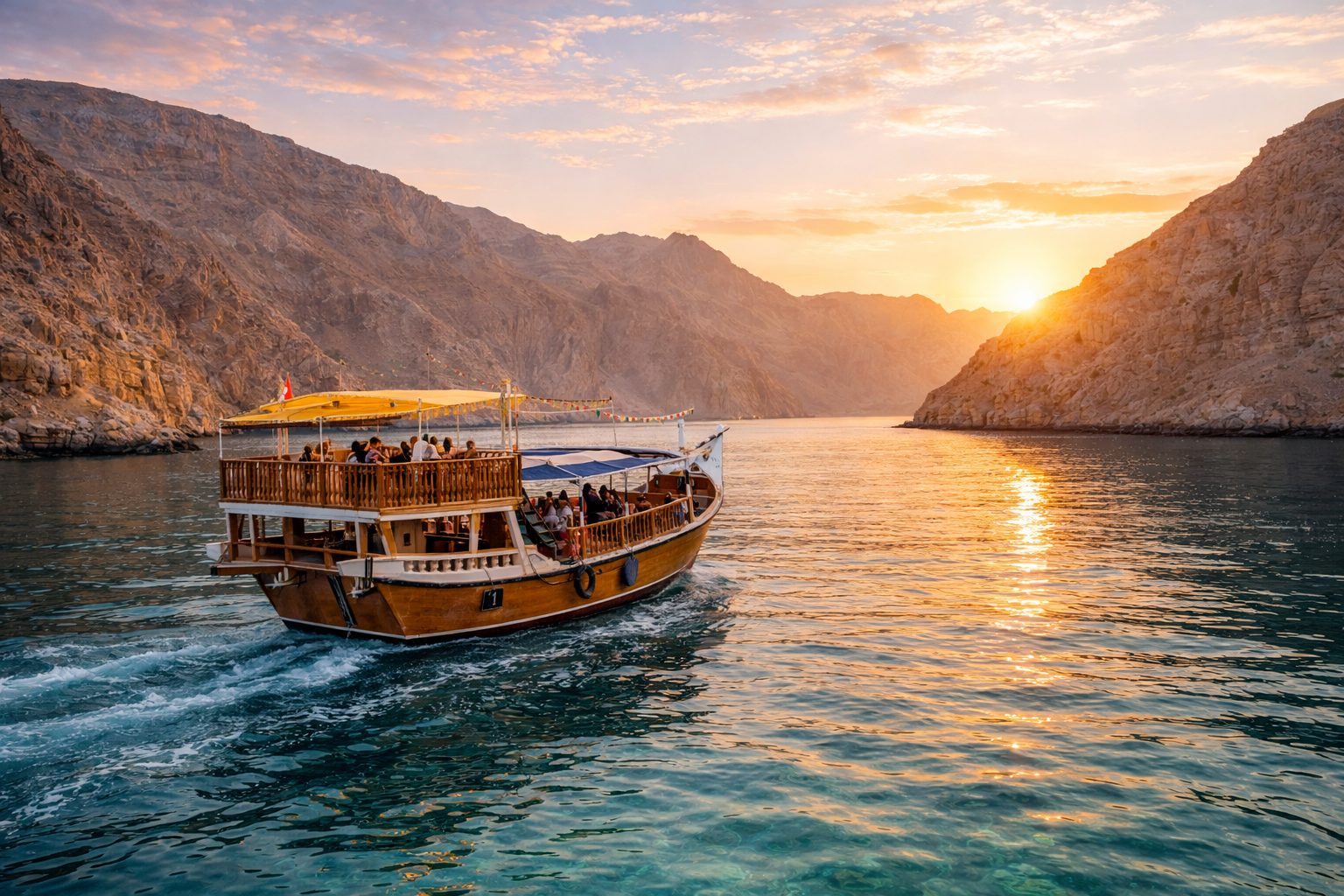
Musandam sits at the tip of the Arabian Peninsula, where the Hajar Mountains plunge into the turquoise waters of the Strait of Hormuz—geographically closer to Iran than to Muscat. This isolation shapes the oman musandam tour package price structure: most operators base themselves in Khasab, the enclave's administrative hub, and package costs reflect fuel, crew wages, and the seasonal rhythm of dolphin migrations and weather windows. A standard shared dhow cruise covers four to six hours on a traditional wooden vessel, anchoring at Telegraph Island or Seebi Island for swimming and snorkeling. Lunch—usually grilled fish, rice, and fruit—is served on deck. Operators bundle life jackets, snorkeling gear, and soft drinks into the base rate, which fluctuates between 25 OMR in the low season (May through September) and 35 OMR during the cooler months when demand peaks. Full-day itineraries add kayaking, a second snorkeling site, and longer dolphin-spotting legs, justifying the 40–50 OMR bracket. Private charters, which accommodate six to twelve passengers, start at 150 OMR and scale with group size and custom requests—sunset timing, fishing equipment, or onboard barbecue setups. Cross-border packages from the UAE embed the tour price within a broader logistics envelope: round-trip transport from Dubai or Ras Al Khaimah, Omani visa processing (if required), and coordination with border officials at Tibat or Wadi Bih. These conveniences push per-person rates to 70–100 OMR, but they eliminate the need to rent a car or navigate the mountain road yourself. Multi-day packages, which pair the dhow cruise with overnight stays in Khasab and excursions to Jebel Harim or the stone villages of Kumzar, range from 180 to 300 OMR depending on accommodation standard and the number of activities bundled. The Musandam tour package cost reflects not just the vessel and crew, but the enclave's logistical reality: limited competition, seasonal weather constraints, and the premium visitors pay for access to one of the Gulf's last undeveloped coastlines. Khasab Castle, a 17th-century Portuguese fort that contextualizes the region's maritime history, charges a separate 0.5 OMR entrance fee and operates from 09:00 to 16:00 most days, closing early on Fridays and remaining shut on Sundays.
“The enclave's isolation shapes pricing—most operators base in Khasab, and costs reflect fuel, crew wages, and the seasonal rhythm of dolphin migrations.”
Khasab Castle operates on a consistent weekly schedule, allowing visitors to coordinate their excursions with the historical site's availability. Please review the following hours to assist with your planning.
The Musandam Peninsula is a geographic exclave of Oman, separated from the rest of the country by the United Arab Emirates. Access to Khasab typically involves crossing the international border by road or arriving via maritime transit.
E11 highway from Dubai/Sharjah to the Ras Al Khaimah border crossing (Dara)
Public transport to Ras Al Khaimah followed by private transfer
Direct transfer from Dubai International Airport to Khasab
Ensure you have your passport ready for the Oman-UAE border crossing and verify visa requirements in advance. Aim to arrive between 09:00 and 11:00 to avoid mid-day heat.
The most effective way to experience Musandam is to arrive between 09:00 and 11:00. This window helps visitors avoid mid-day heat and ensures sufficient time to explore before the afternoon closure.
Cooler, mild temperatures 20°C–30°C
These months provide the most comfortable climate for outdoor tours and excursions.
High heat exceeding 40°C
Extreme temperatures often limit outdoor activity during these months.
—
Arriving between 09:00 and 11:00 maximizes tour value and minimizes exposure to peak heat.
Verdict: The best time to visit is a weekday between 09:00 and 11:00 during the cooler months of October to April.
Cross-border dhow cruises and remote fjord exploration require specific documentation and advance arrangements.
Everything you need to know about oman musandam tour package price
The oman musandam tour package price generally reflects the inclusions such as dhow cruises, snorkeling gear, and refreshments. Variations in cost often depend on whether your itinerary includes transfers from neighboring regions or private versus group charters.
Most operators provide transparent quotes, but it is important to confirm if your package covers lunch or specialized equipment. You should clarify what is included in the base rate before finalizing your booking.
Family pricing often depends on child age policies and specific activity inclusions like dolphin watching or kayaking. Always check the terms of your selected provider to understand how group discounts may affect the final amount.
Solo travelers might pay a premium on private tours compared to shared excursions. Group tours provide a way to share the cost, which often makes the experience more budget-friendly.
While tour rates cover the excursion, visitors must still pay the 0.5 OMR entrance fee for Khasab Castle. This entry charge is standard for all guests and is paid separately at the site.
Choosing an all-inclusive excursion simplifies logistics by bundling transportation, meals, and marine activities. This approach allows you to manage your budget upfront without needing to handle individual payments for each service.
Standard excursions typically include lunch, soft drinks, towels, and snorkeling equipment for the fjords. Confirming these details ensures you are prepared for the day ahead without needing extra supplies.